

Looking for help with car towing after accident in allen tx? MR Towing Services dispatches 24/7 from Allen. Call (214) 238-5134.
This guide covers Can my car be towed after an accident in Allen TX with practical tips from MR Towing Services. Call (214) 238-5134 for 24/7 dispatch.
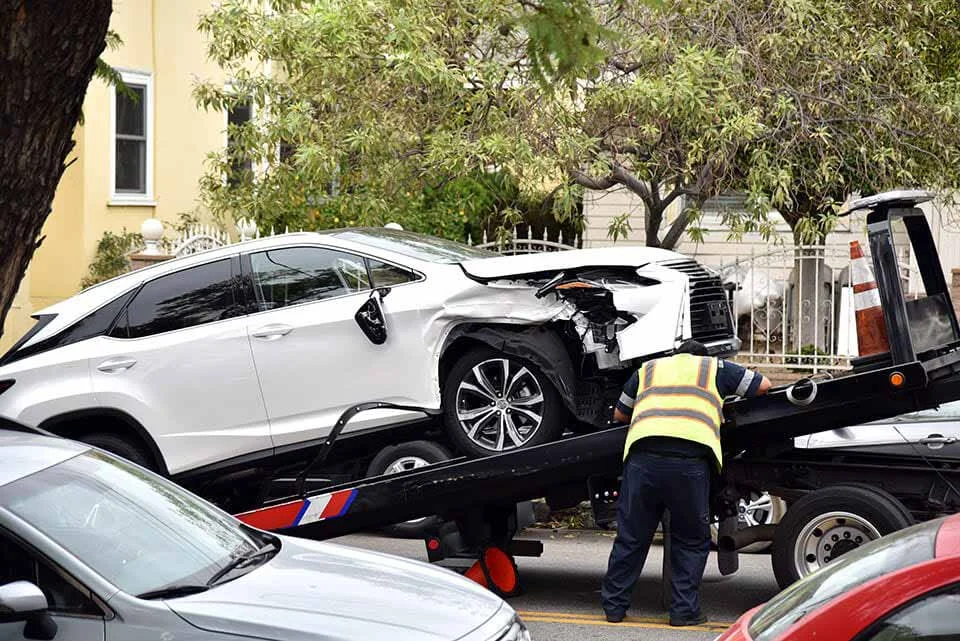
Many accident scenes in Allen, TX require vehicles to be removed for public safety, evidence collection, or to clear traffic, so your car can be towed by police or authorized tow operators; you should comply with officers, notify your insurer, and contact the Allen Police Department or local tow yards promptly to locate and recover your vehicle.
Key Takeaways:
- If your vehicle is disabled or blocking traffic after a crash, Allen police or state troopers can order it towed to clear the roadway or secure the scene.
- You can request a specific tow company, but officers may require the nearest available tow or impound the vehicle for investigation or safety reasons.
- Retrieving a towed car generally requires photo ID, proof of ownership or insurance, and payment of tow and storage fees; unpaid fees can accumulate or lead to auction.
- Collision coverage or roadside-assistance plans often cover towing and storage-notify your insurer promptly so they can arrange or reimburse the tow.
- If you dispute the tow or charges, obtain the tow authorization information from Allen PD, keep accident documentation and photos, and file complaints with the city or the Texas towing regulator (TDLR) if needed.
Understanding Towing Laws in Texas
When your vehicle is involved in an Allen crash, you should know state rules give law enforcement broad authority to order a tow for safety, evidence preservation, or to clear traffic on roads like US‑75 or SH‑121. Texas regulates the towing industry through licensing and complaint processes, so you can file issues with the Texas Department of Licensing and Regulation. Typical crash tows range $150-$400 and daily storage often runs $25-$50, so act quickly to limit costs and paperwork.
State Regulations on Towing
Texas permits police to remove disabled or hazardous vehicles and towers must be licensed by the TDLR; you have the right to retrieve personal effects and request an itemized invoice. In practice, you should expect the towing company to provide the tow location, reason for tow, and a written bill before you pay. If you suspect an illegal or predatory tow, you can document the scene, photograph signage, and submit a TDLR complaint with photos and invoices.
Local Ordinances in Allen, TX
Allen’s municipal code supplements state law by governing private‑property towing, required signage, and city‑contract tow rotations used for police‑ordered removals. If your car was removed from a private lot, you should check for posted towing signs that specify the towing company and phone number; lack of proper signage can be grounds to dispute the tow. City tows are typically handled by contracted towers listed on the Allen PD rotation.
For more detail, you can obtain the specific towing company name and invoice through Allen Police Records after a police‑authorized tow; the records will show who removed the vehicle and where it’s stored. You should note the lot’s sign content, time of tow, and any officer report number-these facts strengthen a dispute. In many local cases, quick contact with the tower and presenting proof of ownership resolves the matter within 24-48 hours and limits daily storage accrual.

When Can Your Car Be Towed?
Police can order your vehicle removed when it blocks traffic, endangers public safety, or must be preserved as evidence after a crash. Property owners or parking managers can authorize tows for trespass or unpaid parking; many cities treat vehicles left unattended for 48-72 hours as abandoned. You should expect towing fees, administrative charges, and daily storage-locate the impound lot quickly, document belongings, and contact your insurer or the Allen Police non‑emergency line for the tow disposition.
After an Accident
At the scene, officers decide whether your car is drivable or must be moved; if it blocks lanes they’ll authorize an immediate tow to a safe location or impound lot. You can request a preferred tow company, but officers may follow the city rotation; your insurer often dispatches tow services within 20-60 minutes. Obtain the tow report number, inventory of personal items, and the towing company’s contact so you can arrange recovery or repairs.
Unattended Vehicles
When your vehicle is parked illegally, blocking a driveway, or left long enough to meet local abandonment criteria, it can be removed without your consent; private lots typically require posted signage listing the towing firm and phone number. You should check the nearest signs for contact details, call non‑emergency police to confirm the tow, and be prepared to provide proof of ownership and ID to reclaim the vehicle.
To recover an unattended or towed vehicle, bring government ID, current registration or title, and payment for towing plus daily storage-fees commonly include a one‑time tow charge and a per‑day storage rate. Start by getting the incident or tow report number from Allen Police, call the listed towing company to verify location and balance due, and photograph any damage before signing release forms to protect your insurance claim and minimize additional costs.
Responsibilities After an Accident
You must secure safety and call 911 for injuries, then collect evidence: photograph vehicle damage, skid marks, and road conditions; exchange names, insurance, and plate numbers; and note witness contacts. If your vehicle is towed, write down the tow company name, driver, invoice number, and impound lot location-those details are important for retrieving the car, disputing improper tows, and supporting insurance claims.
Reporting the Accident
After addressing medical needs, make sure a law enforcement officer documents the scene and gives you the crash report number plus the responding officer’s name and badge; Texas requires a written report for injury, death, or property damage of $1,000 or more. That CR‑3 or police report is commonly required by insurers, tow companies, and courts, so order a copy online or from the police department promptly.
Notifying Your Insurance
Contact your insurer as soon as possible-many policies expect notification within 24-72 hours-and provide the police report number, photos, witness information, and any tow receipts. Report the tow company and impound location so your carrier can authorize release or direct repairs; keep all invoices and the tow agreement to ensure proper claims handling and reimbursement if your policy covers towing or collision losses.
If you need clarity on coverages, note that collision typically pays for repairs minus your deductible (commonly $250-$1,000), towing and labor reimburses tow/roadside expenses (often up to $100-$200), and comprehensive handles non‑collision losses like theft or weather damage. When another driver is at fault, your insurer may pursue subrogation to recover costs and your deductible-submit estimates, receipts, and the tow invoice to the adjuster so they can document and act on your claim.
Alternatives to Towing
If you prefer to avoid a city-ordered tow, you can arrange on-scene recovery, private removal to a friend’s driveway, or a mobile repair that gets you driving again. On-site services like jump-starts, tire changes, and battery replacements typically run $50-150; winch recoveries and off-road pulls can reach $100-300. When police haven’t ordered impoundment, choosing your own provider often reduces immediate storage exposure, which commonly runs $20-40 per day.
Vehicle Recovery Options
You can request a flatbed for frame or severe body damage, a wheel-lift for lighter wrecks, or use a dolly for rear/front lifts; flatbeds generally cost 15-30% more but minimize further damage. Mobile mechanics can perform starter, alternator, or brake fixes on site-common tow-substitution for simple failures-while self-recovery with approved straps is only advisable with proper equipment and assistance to avoid injury or legal liability.
Contacting a Tow Service
Call your insurer or roadside-assistance first since many plans cover 3-5 miles or a set number of tows; otherwise, choose a licensed local operator, ask for an ETA (often 15-45 minutes in Allen), confirm the hookup method, request a firm price and storage location, and get a written estimate or receipt before release to avoid surprise fees.
Before the tow arrives, photograph the vehicle and note damage, record the company name, dispatcher ID and truck number, and ask for a signed estimate showing hookup fee, per-mile charge, and daily storage rates (commonly $25-50/day). Verify payment methods, obtain a written receipt when you drop or retrieve the car, and consult your insurer about direct billing to limit out-of-pocket costs and potential recovery disputes.
Costs Associated with Towing
When your vehicle is towed after an accident, expect a base towing fee plus mileage and possible recovery surcharges; typical local tows in Allen run $75-$150 with $3-$5 per mile and winch or heavy‑vehicle fees of $50-$250 for complex recoveries. If you have roadside assistance or insurer-approved vendors, your out‑of‑pocket may be limited to a deductible, otherwise cumulative fees can exceed several hundred dollars quickly.
Average Towing Fees in Allen, TX
In Allen, standard tow providers commonly charge a base rate of $75-$150 for a routine tow and $3-$5 per mile thereafter; specialty tows for SUVs, trucks, or rollovers typically add $100-$250. Ask for an upfront estimate, confirm hookup and after‑hours rates, and check whether your insurer’s network offers discounted pricing to lower your immediate expense.
Impound Fees and Storage Costs
If police impound your vehicle, release fees often start at $50-$150 and storage usually runs $20-$50 per day; many lots add administrative or after‑hours release fees, and unpaid storage can lead to additional penalties or auction after 30-60 days. Verify municipal and private lot policies to understand total liabilities before arranging pickup.
Additionally, you will need proof of ownership, current registration, and insurance to retrieve the car; Collin County impound lots may require cash, card, or certified funds and impose an extra $25-$100 release charge. If you delay retrieval beyond a week, storage costs can quickly exceed the car’s salvage value-request an itemized invoice, ask about grace periods, and coordinate with your insurer to minimize days in storage.
How to Retrieve Your Towed Vehicle
After a tow, locate the impound agency listed on the police report or tow receipt and call to confirm hours, fees, and any law-enforcement holds; you’ll often see a base tow of $100-$250, $3-$5 per mile, and storage of $20-$50 per day, with evidence holds lasting 24-72 hours or longer, so plan for payment and alternate transportation if your car won’t be released immediately.
Steps to Recover Your Car
First, go to the impound lot with required documents and the tow receipt, pay outstanding towing and storage fees (for example a $150 tow plus $30/day storage), sign the release form, and inspect your vehicle for damage before leaving; if law enforcement still holds the car for investigation, contact the assigned detective or your attorney to request a documented release or court order.
Important Documentation Needed
You’ll need a government photo ID, current vehicle registration or title, proof of insurance, the tow receipt or police report number, and acceptable payment; if someone else picks up the car, provide a notarized power of attorney or written authorization, and if the vehicle is financed, bring lender authorization or payoff information.
When your car is financed or leased, impound lots typically require written lender consent or payoff confirmation and may delay release pending verification; for investigatory holds, the releasing officer or prosecutor may demand a written release or court order, and third-party pickups generally must present notarized authorization plus matching ID-lots usually accept cash, debit, or cashier’s checks rather than personal checks.
Summing up
Now, after an accident in Allen, TX, your car can be towed if it’s a traffic hazard, unsafe to drive, blocking the roadway, involved in a crime, or if officers decide impoundment is necessary. You have the right to collect personal items, ask where and why your vehicle was taken, request documentation and receipts, and contest an improper tow. If possible, choose or approve a non-emergency tow company to limit extra fees.
FAQ
Q: Can my car be towed from the scene of an accident in Allen TX?
A: Yes. Allen police or emergency responders can have a vehicle towed if it poses a traffic hazard, creates a safety risk, is blocking the roadway, or must be moved to clear the scene. If the vehicle is blocking private property, the property owner or their authorized agent may also arrange a tow. You may also be able to authorize a private tow company yourself at the scene if you are able to do so and the officer permits it. If the vehicle is needed as evidence in a crash investigation, officers can order an impound and restrict release until the investigation is complete.
Q: Who is responsible for towing and storage fees after an accident?
A: The vehicle owner is typically responsible for initial towing and storage charges. Your auto insurance policy may cover towing or reimburse you depending on your coverage. If another driver is at fault, their insurer might reimburse these costs through a claim or subrogation after fault is determined. If the tow was authorized by police as an impound or for evidence, you may still owe storage and towing fees, though those charges and how they are handled can vary; check with the investigating officer and your insurer.
Q: How do I find where my car was towed and what do I need to retrieve it?
A: Contact Allen Police Department (non-emergency or the responding officer) to learn which tow company or impound holds the vehicle. Provide your name, license plate, VIN, and location/time of the crash. To retrieve the vehicle you will generally need a government photo ID, proof of ownership or registration, proof of insurance (if required), and the tow receipt or release form. If the vehicle was impounded as evidence, coordinate with the investigating officer or records unit for release procedures. Be prepared to pay towing and storage fees at the tow facility to get immediate release.
Q: Can I contest a tow I believe was improper or unauthorized in Allen?
A: Yes. First request an itemized receipt and ask the tow facility for the authorization details. Contact the Allen Police Department records or the officer who ordered the tow to confirm the reason and documentation. If you believe the tow violated local rules or state law, file a formal complaint with the City of Allen or with the Texas Department of Licensing and Regulation (TDLR) for tow operator complaints. Keep copies of receipts, photographs, witness statements, and any communications; you can also pursue a refund or damages in small claims court if applicable.
Q: What happens if my car is declared a total loss after the accident-how does towing and storage work then?
A: If an insurer declares the vehicle a total loss, the insurer typically takes possession and directs where the vehicle will be towed (salvage yard, auction, or designated facility). The insurer usually handles or reimburses reasonable towing and storage charges up to policy limits. You should remove personal belongings promptly; if the vehicle remains in a tow/storage facility, follow the facility’s release process and provide identification and authorization. Ask your insurer for the timeline for salvage handling, title transfer, and any deadlines to avoid additional storage fees.
Related: towing services, contact us, and service areas. Road safety: NHTSA.
More about car towing after accident in allen tx
MR Towing Services can help when you need car towing after accident in allen tx support in the DFW area.


