Many drivers in Plano rely on tow trucks after accidents, and you should know what services they offer, where to call, and how towing affects insurance and police procedures.
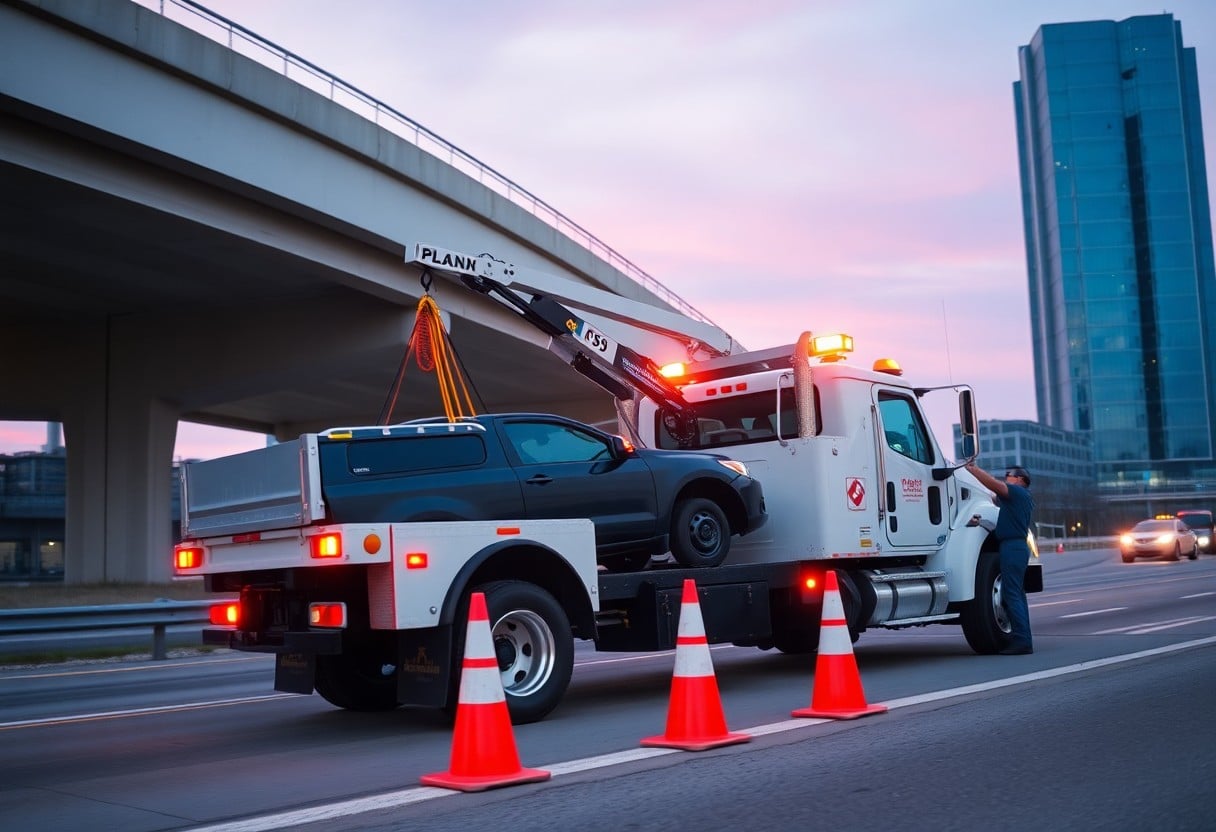
Immediate Scene Safety and Traffic Management
You should keep bystanders back, direct traffic only if trained, and call a tow operator to move disabled vehicles so responders can work safely and clear lanes quickly.
Clearing debris to prevent secondary accidents
Use tow crews’ equipment to remove glass, twisted metal, and fluids, reducing tire damage and secondary collisions while you coordinate debris staging for pickup.
Securing the perimeter for Plano emergency responders
Keep traffic cones and warning lights between lanes and the incident so you follow officer directions and allow tow operators to set safe tow angles without crowding the scene.
Coordinate directly with Plano PD and EMS so you can confirm safe vehicle removal paths, protect patient access, and ensure tow vehicles avoid blocking hydrants or emergency lanes.
Specialized Collision Recovery Services
You can rely on specialized recovery crews to handle complex wrecks, secure the scene, stabilize vehicles, and coordinate with insurers to arrange towing and transport quickly.
Flatbed towing for severely damaged vehicles
Flatbed towing keeps your vehicle fully supported and secured during transport, preventing extra damage when the frame or undercarriage is compromised.
Winching and extraction from off-road areas
Winching equipment lets crews pull your car from ditches or embankments with controlled lines, minimizing further damage and preparing it for safe recovery.
Technicians assess ground conditions, select secure anchor points, and use winches, snatch blocks, and straps while keeping you informed about timing, safety precautions, and tow options after extraction.
Navigating Insurance and Documentation
Insurance claims need the police report, tow receipt, vehicle identification, and a written estimate; you should collect copies from the tow operator and upload them to your insurer promptly to support your claim and avoid delays.
Gathering visual evidence for damage claims
Photos should include wide shots, close-ups of damage, license plates, VIN, and scene context; you should save geotagged files, back them up, and send copies to your insurer for faster processing.
Direct billing and insurance provider coordination
Ask the tow company if they bill your insurer directly, get the claim number and authorization, and keep the tow bill and storage receipts for your records.
If the tow company offers direct billing, confirm they have your insurer’s name, policy or claim number, and written authorization before release; request an itemized invoice and a submission receipt so you can verify charges. Should your insurer deny payment, you’ll be billed-keep all receipts, photos, and communications to contest fees and involve your adjuster. Quick follow-up limits storage costs and helps establish who is financially responsible.
Coordination with Plano Law Enforcement
Police will set priorities at the accident scene; you should follow officer instructions so your tow request aligns with safety and evidence protocols, speeding vehicle removal and avoiding interference with the investigation.
Following municipal accident scene protocols
Follow officers’ directions, present required documents, and stay clear of taped areas so you can secure approved towing without creating hazards or delaying emergency response.
Managing police-authorized rotations and dispatch
Expect officers to use an authorized rotation list; you should verify your tow company is on that list to prevent refusal or additional wait time at the scene.
Confirm the exact tow company name and dispatch number with officers before release; you should ask whether rotation calls come from city dispatch or officer radio, note any dispatcher reference for billing disputes, and accept only vehicles released through the authorized process. If you hire private towing, tell officers to avoid duplicate dispatches and potential tow conflicts.
Vehicle Storage and Repair Logistics
Your tow company can arrange vehicle storage, coordinate repairs, and communicate with insurers so you can focus on safety and claims.
Transport to local certified collision centers
Towing services will deliver your vehicle to certified collision centers, preserving damage details and speeding repairs while ensuring insurance requirements are met.
Utilizing secure, monitored storage facilities
Secure storage options let you keep your vehicle in monitored lots, protecting it from theft, weather, and unauthorized access until repairs or claims are handled.
Facilities offering monitored storage typically include 24/7 video surveillance, gated access, and climate-controlled bays to limit further damage and document conditions for insurers. You can request itemized fee schedules, release procedures, and written evidence of condition so you’re prepared for insurer inspections and timely retrieval once repairs are approved.
Texas Towing Regulations and Consumer Rights
Texas law gives you rights when a tow truck arrives after an accident, including fee caps, required signage, and prompt notice; you can request towing company info and file complaints if charges seem excessive.
Understanding non-consent towing fee structures
Fees for non-consent tows vary by zone and time, so you should check posted rates and ask for an itemized bill before paying to avoid surprise charges.
The right to choose your preferred towing destination
You may direct the tow to a facility of your choice within reasonable distance, and the tow operator must honor that unless an impound hold or safety issue applies.
If you choose a destination, the tow operator should follow your direction unless law enforcement requires impoundment or safety prevents it. Ask for written confirmation of the destination and an itemized estimate before the vehicle leaves the scene. Contact police or consumer protection if the operator refuses, reroutes without consent, or charges unlawful fees.
To wrap up
With these considerations you can decide quickly whether a tow truck will help after an accident in Plano, TX: you can get wrecked vehicles removed, prevent further damage, secure evidence, and transport your car to repair or storage while coordinating with police and insurers to minimize delays.
FAQ
Q: Can a tow truck help after an accident in Plano TX?
A: Yes. Tow trucks in Plano respond to accident scenes to remove disabled vehicles, clear traffic lanes, and reduce the risk of additional collisions. Drivers or passengers should call 911 if there are injuries, then either request a tow through the responding officer or contact a local towing company for private recovery. Police-ordered tows may be placed into impound; private tows require owner authorization unless an officer directs otherwise.
Q: What towing services are available after an accident in Plano TX?
A: Common post-accident services include flatbed towing for heavily damaged vehicles, wheel-lift or hook-and-chain towing for drivable cars, winching and recovery from ditches or medians, vehicle stabilization and light extrication support, jump starts, fuel delivery, and lockout assistance. Many companies also provide temporary vehicle storage, coordination with repair shops, and documentation for insurance claims.
Q: Who can authorize a tow after an accident in Plano TX?
A: Police can order a tow when a vehicle poses a safety hazard, blocks traffic, or must be impounded. Vehicle owners or drivers may authorize private towing if they prefer a specific company. Property owners can request a tow for vehicles blocking private property. Insurance companies sometimes arrange towing when the owner requests assistance through a roadside program or after filing a claim.
Q: Will my insurance cover towing after an accident in Plano TX?
A: Coverage depends on your auto policy and any roadside assistance add-ons. Collision coverage often pays for towing related to an accident after you meet the deductible, provided you submit the tow receipt with your claim. Roadside assistance or towing-and-labor endorsements may cover hook-up and a set number of miles with little or no out-of-pocket cost. Ask your agent about pre-authorization rules and whether the insurer can bill the tow company directly.
Q: How do I choose a reputable tow company in Plano TX after an accident?
A: Look for a company that offers 24/7 service, displays proper identification on the truck, and carries liability and cargo insurance. Ask for an estimated price that itemizes hookup, per-mile charges, and possible storage fees, and get the dispatch or driver name and vehicle ID. Photograph the scene and any damage, keep receipts, and confirm where the vehicle will be stored if impounded. Avoid operators who demand immediate cash without written paperwork or refuse to provide a company name and an itemized estimate.